ENGINEERING STEELS + ALLOYS






385 Brass |
|---|
| Brass alloy 385 has been specifically developed for the mass production of brass components in high speed lathes,providing maximum output and long tool life.
Typical applications are nuts, bolts and screw threads.
|
| Colour Code | Stocked Sizes | |
| Red (Bar End)
|
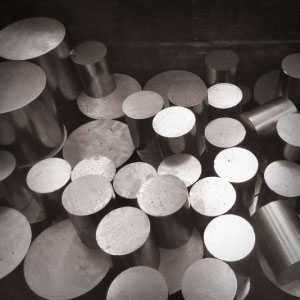
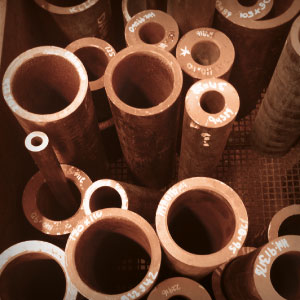
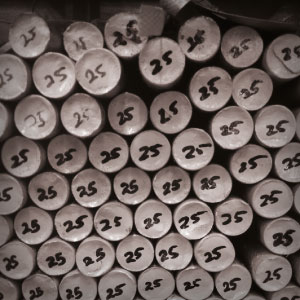
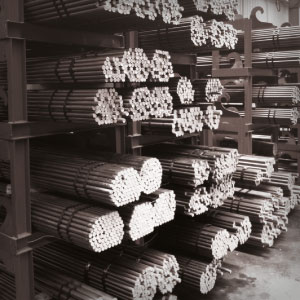
Rounds | 4.76 mm to 101.6 mm diameter |
| Squares | 9.52 mm to 50.8 mm A/F | |
| Hexagons | 9.52 mm to 44.45 mm A/F | |
| Bar Finish | ||
| Cold Drawn | ||
| Related Specifications | |
| Australia | AS 1567-385 |
| Germany | DIN 1.7672 CuZn39Pb3 |
| Great Britain | BS 2847-CZ121 |
| USA | ASTM B455 UNS C38510 |
| Chemical Composition | ||
| Min. % | Max. % | |
| Copper | 56 | 60 |
| Lead | 2.5 | 4.50 |
| Zinc | Remainder | |
| Typical Mechanical Properties | |||||||
| Tensile Strength Mpa | 400 | ||||||
| Yield Strength Mpa | 200 | ||||||
| Elongation % | 20 | ||||||
| Hardness HV | 135 | ||||||
| Heat Treatment | |||||||
| Annealing | Heat to 425ºC - 600ºC, hold until temperature is uniform throughout the section and cool in furnace. | ||||||
| Stress Relieving | Heat to 250ºC - 300ºC, hold until temperature is uniform throughout the section. | ||||||
| Check Test Certificate if critical for end use. | |||||||
| Hot Working |
| Fair hot working properties within an ideal temperature range of 700ºC to 800ºC. |
| Cold Working |
| Exhibits poor cold working properties, and cold heading is not recommended. |
| Machining |
| A free cutting brass specifically developed for maximum output and longest tool life, ideally suited for mass produced brass components. |
| Corrosion Resistance |
| Has good corrosion resistance to weathering, with a fair resistance to many waters.
It should not be used in contact with ammonia, or ammonia compounds, as it may suffer stress corrosion cracking.
|
| Plating |
| Provides good surface finish through either polishing, and/or electroplating. |
| Joining Properties |
| Soldering - Whilst good results can be achieved from Silver soldering, better results can be achieved from Soft soldering.
Brazing - Good results can be achieved from brazing.
Welding - Fair results can be achieved from both Oxy acetylene & Carbon arc welding. However Gas shielded and coated metal arc welding, and resistance welding is not recommended.
|